
Valentine’s Day is just around the corner and, if you are not sure what to cook, here I bring you an elegant, delicious, and easy-to-make option: risotto with cava and Norway lobster.
This dish is ideal for a special dinner, as it combines the intense flavor of seafood with the freshness and lightness of cava. Although it may seem complicated, I assure you that with a few tricks anyone can prepare it at home.
The perfect combination of seafood and cava
The risotto with cava and Norway lobster is a modern version of an Italian classic. The traditional risotto technique, which consists of slow cooking with the progressive addition of broth, is enriched in this recipe with the flavor of the seafood and the fruity aroma of the cava.
The cava is a sparkling wine with citrus and floral notes, which enhances the natural sweetness of the Norway lobsters and provides a perfect balance to the dish. As it reduces, it leaves a subtle and sophisticated touch without overpowering the flavor of the seafood.
If you want to surprise your partner or simply treat yourself to an exquisite dish, keep reading. I will show you how to make it creamy, without cream, with a perfect texture and full of flavor. Let’s go for it!
Contents
Watch the video with all the steps
Don’t forget to follow me on Instagram! There I share more recipes, tricks, and special content for lovers of Italian cuisine.

Main ingredients for the risotto with cava and Norway lobster
For 2 people
Preparation time: 10 min
Cooking time: 35 min
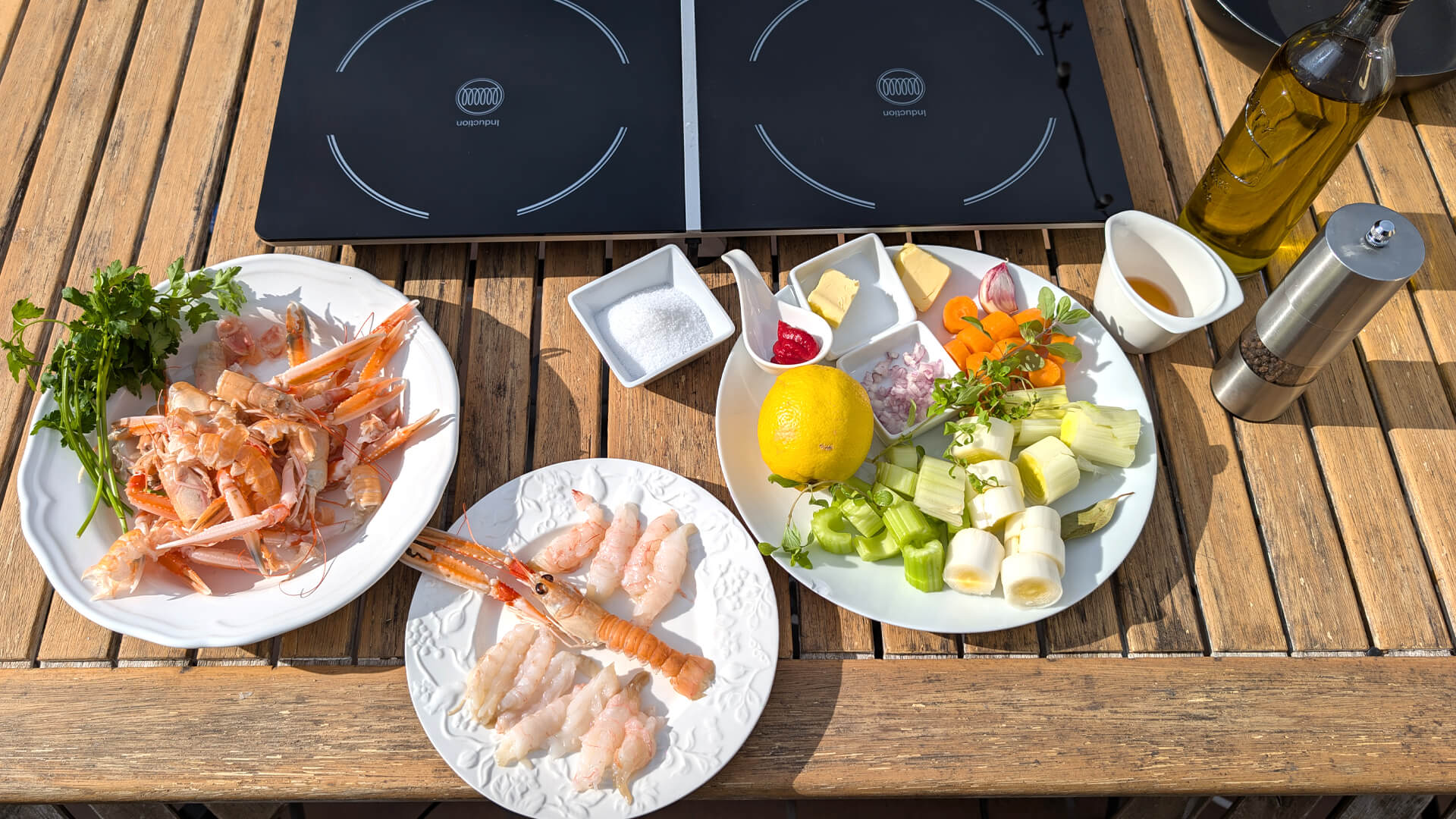
- 10 medium Norway lobsters
- 160 g Carnaroli or Vialone Nano rice
- 200 ml cava brut or brut nature
- 500-600 ml Norway lobster broth (hot bisque)
- 1 shallot or ½ onion
- 1 garlic clove
- 1 small carrot
- ½ celery stalk
- 1 tablespoon tomato paste
- 30 g butter
- 1 splash of brandy
- Extra virgin olive oil
- Salt and black pepper
- 1 bay leaf
- 1 pinch of lemon zest
Remember: At the end of the article you will find the complete recipe card with detailed cooking and preparation times.
How to prepare the risotto with cava and Norway lobster
Prepare the Norway lobster broth
Sauté the Norway lobster heads and shells well in extra virgin olive oil and butter. Add the leek or onion, garlic, carrot, and celery and let them brown. Incorporate the tomato paste and mix well. Deglaze with brandy, let it evaporate, and add cold water or ice until covered. Cook over medium heat for 20-25 minutes, strain the broth, and keep it hot.
Cook the Norway lobsters
Cut the Norway lobster bodies, reserving some whole for decoration. Season the Norway lobsters with salt and pepper. In a pan with extra virgin olive oil, sear them for 30 seconds per side and set them aside covered.
Prepare the risotto
Sauté the shallot in butter and a little extra virgin olive oil until transparent. Add the rice and toast it slightly. Pour in the cold cava and let it reduce completely. Incorporate the Norway lobster broth little by little, stirring gently until the rice is creamy and al dente. Add the chopped Norway lobsters 30 seconds before turning off the heat.
Mantecatura and plating
Remove the pan from the heat and add the cold butter. Stir well. Serve on a flat plate, decorate with the whole Norway lobsters, and sprinkle with lemon zest.
Tips and tricks for a perfect risotto
How to achieve a broth with maximum flavor
- Sauté the shells and heads well before adding the liquid, crushing them with a spoon so they release their juice.
- Use cold water or ice instead of hot water, as this helps to better extract the collagen and gelatin from the seafood without oxidizing it.
- Do not boil the broth over high heat; keep it at medium heat.
The secret so the Norway lobsters do not end up dry
- Sear them briefly in a very hot pan with a little extra virgin olive oil.
- Do not cook the Norway lobster bodies in the risotto during the cooking process; they are added at the end in the mantecatura phase.
- Reserve some whole Norway lobsters for the final decoration, giving the dish a more sophisticated presentation.
How to prevent the cava from making the risotto acidic
- Make sure the cava is reduced almost completely before adding the Norway lobster broth.
The importance of cold butter in the mantecatura
- Use very cold butter and add it off the heat to achieve a perfect emulsion.
- Stir vigorously with a spoon or silicone spatula until the rice acquires a silky texture.
Frequently Asked Questions
What type of rice is best for risotto?
Carnaroli rice is ideal because it has a higher starch content and absorbs liquids well without losing its texture. You can also use Vialone Nano.
Can I substitute the cava with another type of wine?
Yes, if you don’t have cava, you can use a dry white wine. However, the cava provides a special freshness and lightness to the dish.
Can risotto be reheated?
Risotto is best freshly made, but if you need to reheat it, add a little hot broth and stir well until you regain the creaminess.
How do I get the risotto to be very creamy without adding cream?
The secret is in the mantecatura: adding cold butter and stirring off the heat to emulsify the liquids and achieve the perfect texture.
Related recipes you will love
If you are passionate about Italian cuisine, here are other suggestions to enjoy classic flavors:
- Pasta e ceci (pasta with chickpeas) Roman style: A humble dish but full of history, which combines pasta and chickpeas in a comforting preparation.
- Stracciatella alla romana: An Italian egg and cheese soup, simple and comforting, perfect for cold days.
- Artichokes Roman style (carciofi alla romana): An Italian classic that highlights the flavor of fresh artichokes, prepared with herbs and olive oil.
Enjoy your risotto with cava and Norway lobster!
If you liked this recipe, subscribe to my YouTube channel and Instagram to discover more authentic Italian dishes. Leave a comment with your impressions and share your photos on social media. I would love to see your creations!
Bon appétit!
The latest video recipes from my channel!

The card
Risotto with Cava and Langoustines
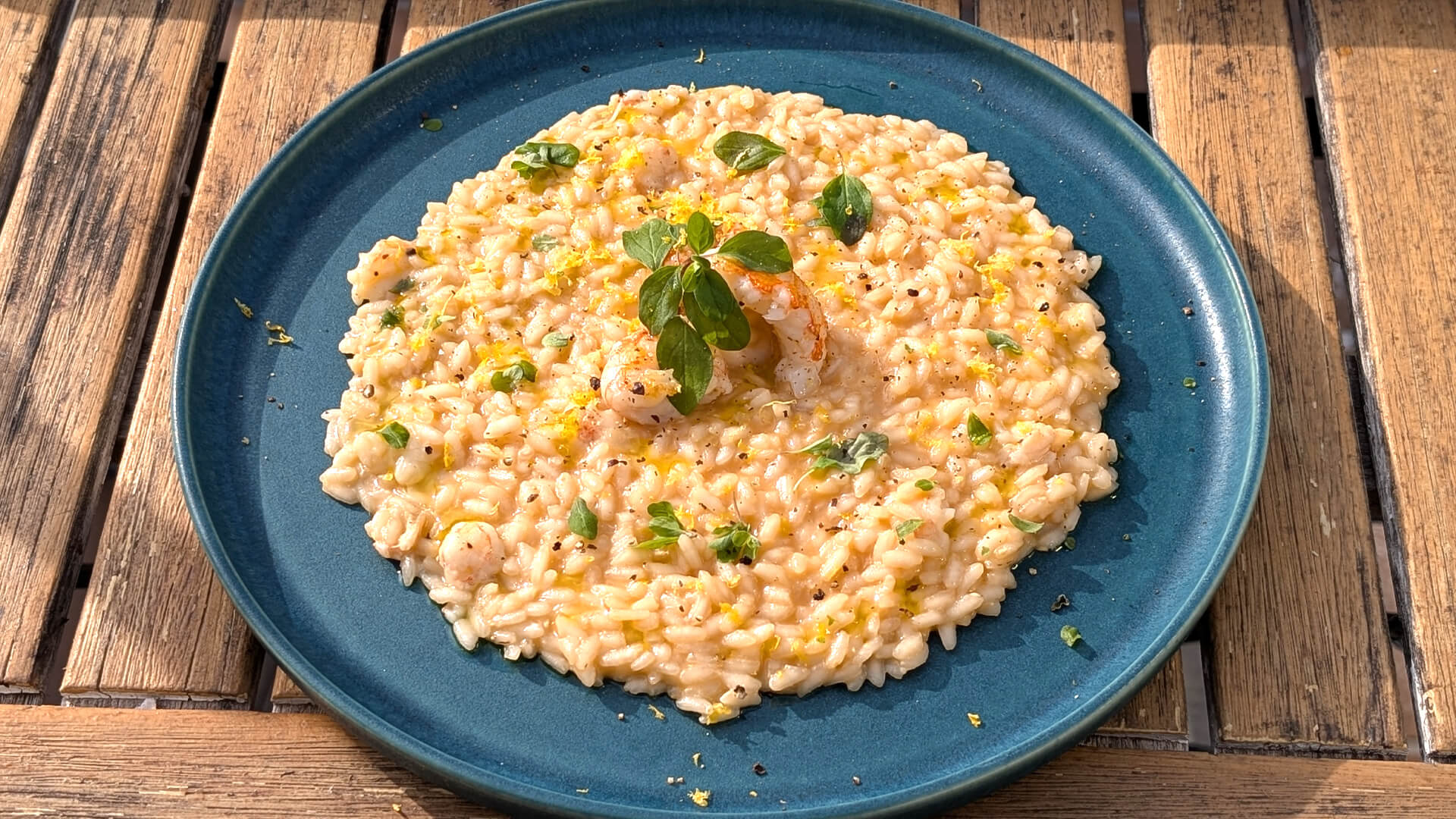
A creamy and elegant risotto with langoustines and cava, perfect for surprising someone at a special dinner like Valentine’s Day. Easy, cream-free, and full of flavor!
Ingredients
- 10 medium langoustines
- 160 g Carnaroli or Vialone Nano rice
- 200 ml cava brut or brut nature
- 500-600 ml langoustine stock hot bisque
- 1 shallot or ½ onion
- 1 garlic clove
- 1 small carrot
- ½ celery stalk
- 1 tablespoon tomato paste
- 30 g butter
- 1 splash of brandy
- Extra virgin olive oil
- Salt and black pepper
- 1 bay leaf
- 1 pinch of lemon zest
Instructions
- Prepare the langoustine stock: Sauté the langoustine heads and shells well in extra virgin olive oil and butter.
- Add the shallot, garlic, carrot, and celery and let them brown.
- Incorporate the tomato paste and mix well.
- Deglaze with brandy, let it evaporate, and add cold water or ice until covered.
- Cook over medium heat for 25-30 minutes, strain the stock, and keep it warm.
- Cook the langoustines: Cut the langoustine bodies, reserving some whole for garnish.
- In a pan with extra virgin olive oil, sear them for 30 seconds per side and set aside covered.
- Prepare the risotto: Sauté the shallot in extra virgin olive oil until translucent.
- Add the rice and toast it lightly.
- Pour in the cold cava and let it reduce completely.
- Incorporate the langoustine stock little by little, stirring gently until the rice is creamy and al dente.
- Mantecatura and plating: Remove the pan from the heat and add the cold butter and the chopped langoustines.
- Stir well until the risotto is silky and creamy.
- Serve on a flat plate, garnish with the whole langoustines, and sprinkle with lemon zest.
Notes
- n
- For an ultra-creamy risotto, add the butter while very cold and stir vigorously off the heat.
n