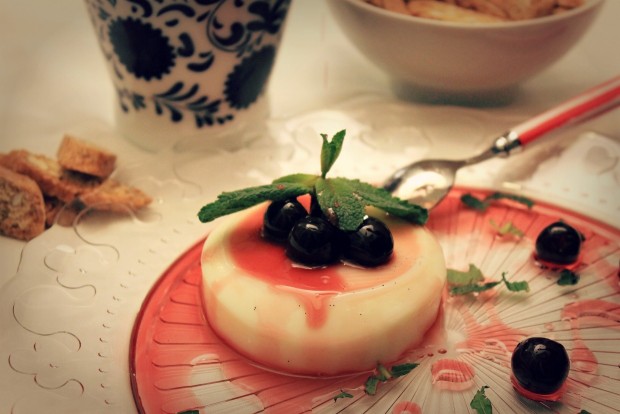
Panna Cotta in Italy is called Panna Cotta (literally “Cooked Cream”) and is almost as appreciated as tiramisu. Personally, I hate it, but that is not a powerful enough reason to justify it not appearing on my blog. This weekend I made it, four servings, because my partner likes it a lot, but don’t get the wrong idea about me. My intention is not to please him, but to turn him little by little, without him almost noticing, into a human barrel. It is a fairly effective “anti-bitch” prevention method, since money-wise, it’s not like they can make a big deal out of him. That’s a lie. Actually, my plan is much meaner, but I won’t tell you, because I wouldn’t want to scare you. I also wouldn’t like, at this point, to make people suspect that I am smarter and more of a Winnie the Pooh’s daughter than I seem.
But let’s put my domestic problems aside and return to what matters. Although of Piedmontese origin, panna cotta is eaten throughout Italy and part of abroad. The part I like most about writing on the blog is looking for the arguments that usually revolve around the best or most traditional way to prepare a recipe. I love it when people fight and get indignant over issues that are not life or death. Naturally, if I can watch from a certain distance. In the case of panna cotta, with my humble means as a super amateur cook, the only controversy I can pass on to you is about gelatin vs. egg white to set the invention. Although most panna cotta recipes you find have gelatin, there are those who say it is better to do it with egg white, so that it gets a creamier consistency. I have never tried it, but if, as they say, with the egg it becomes less WOBBLY, I might even come to like it. However, I have decided to give you the recipe with gelatin, because almost everyone makes it this way and it is much easier and faster than cooking it in a bain-marie. 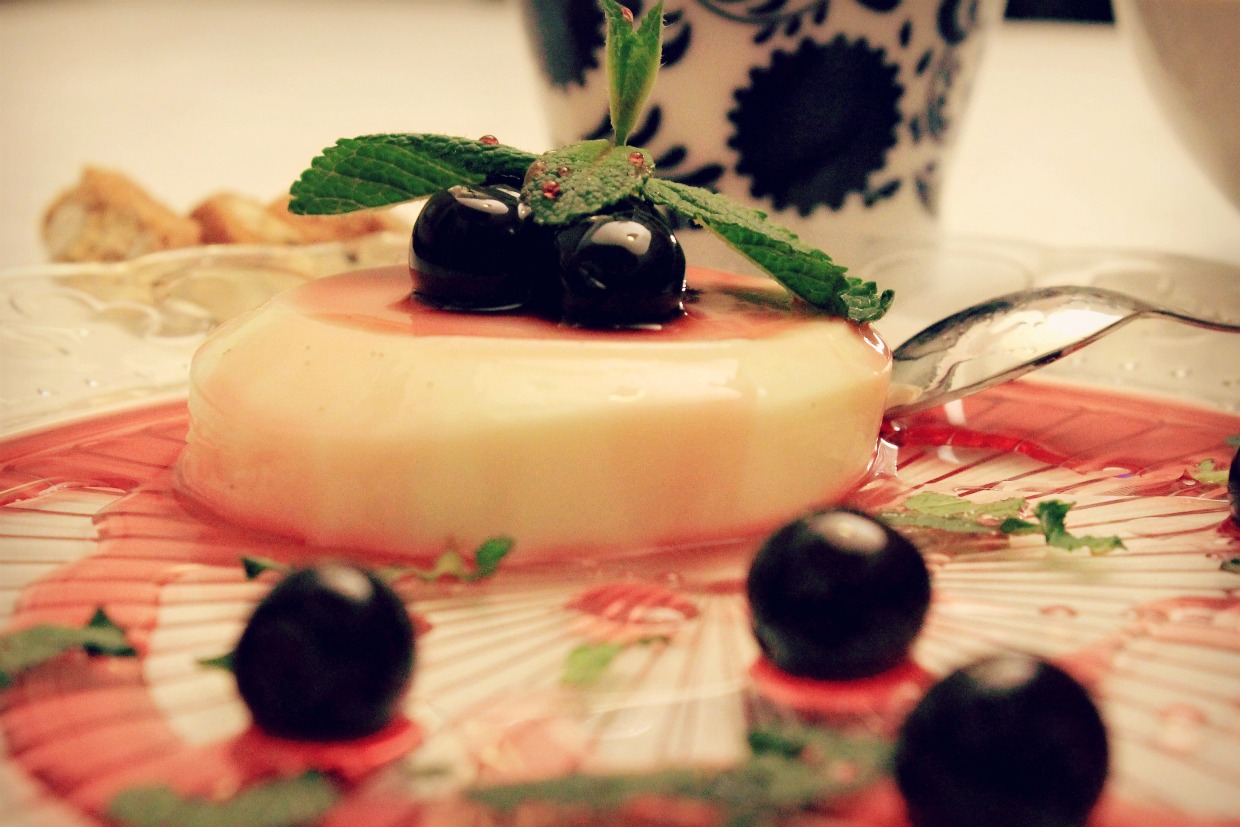
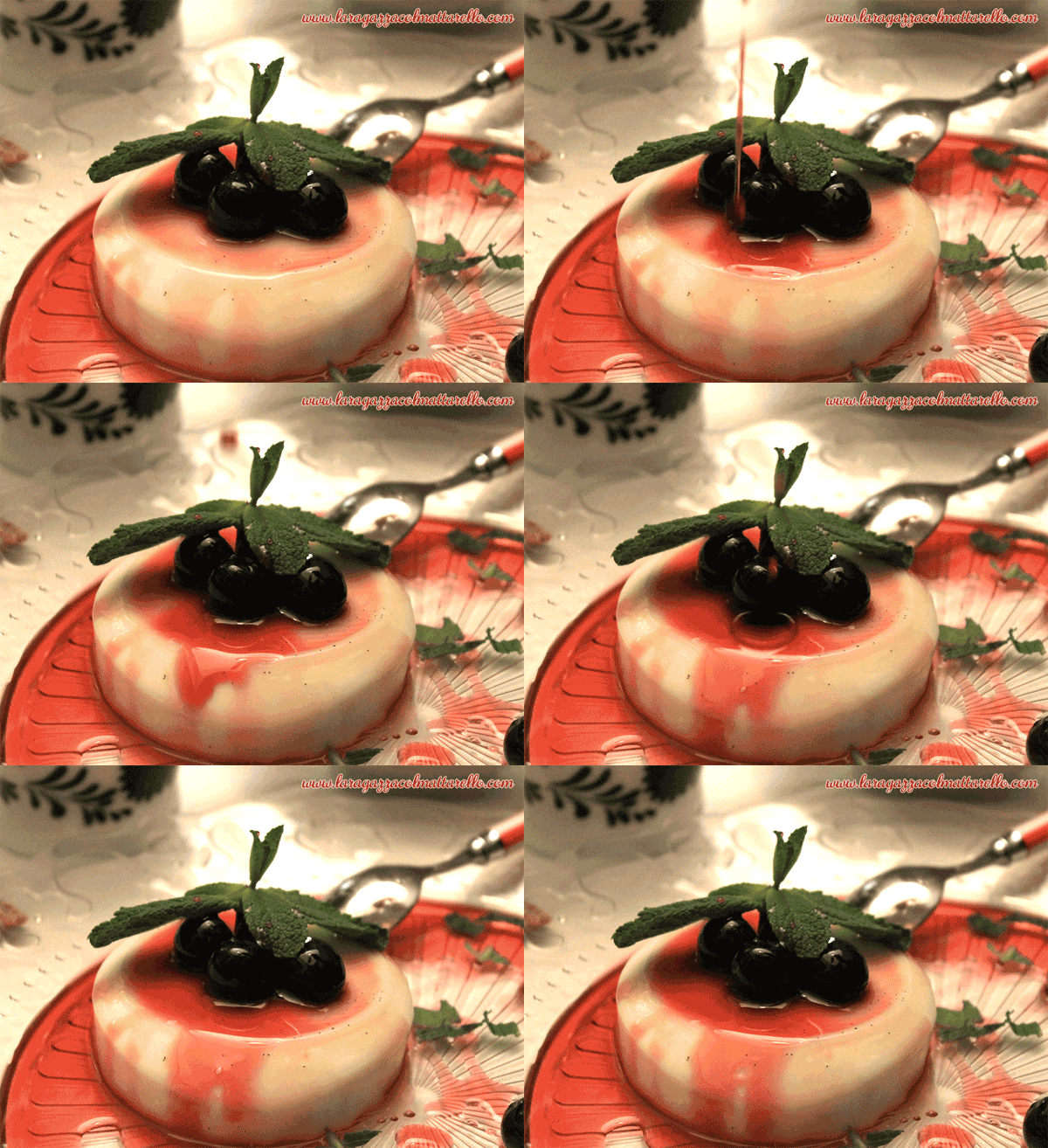
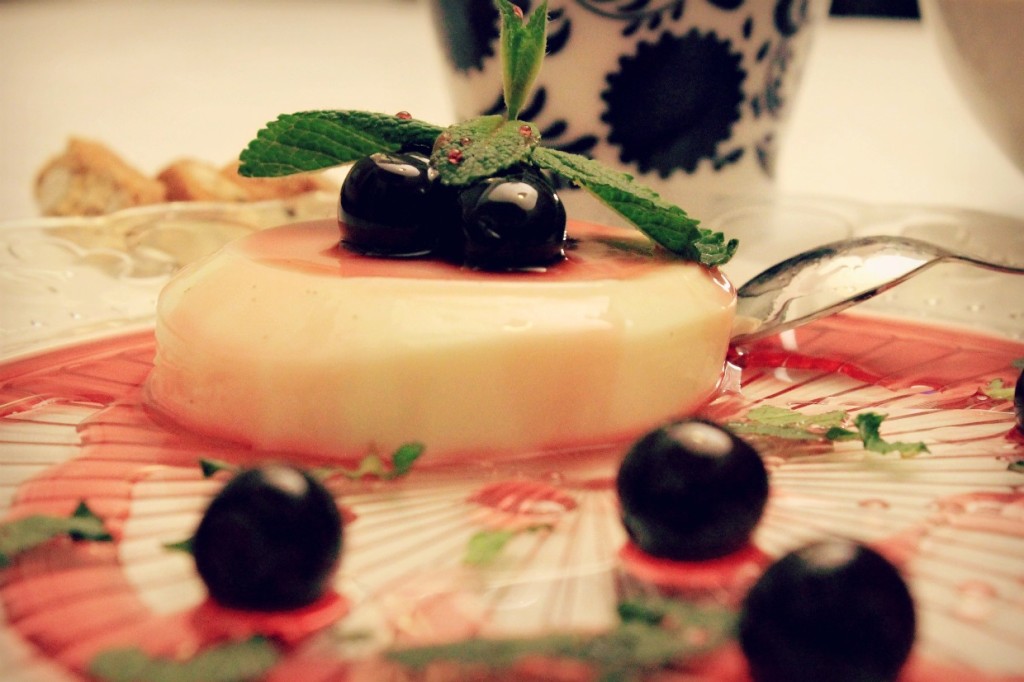
I have accompanied it with amarene sciroppate Fabbri, some sour cherries in syrup that are “la morte sua” (to die for), as they say around here. Fabbri, a Bolognese liqueur and syrup company born in 1905, became famous from the thirties precisely as a result of the commercialization of these sour cherries which, in addition, they had the brilliant idea of selling in these cute white and blue jars. In Spain it is a bit more difficult to find them, but don’t worry. If you don’t know where to buy amarene sciroppate, it will come out just as delicious with cherries in syrup. I used them because I had a jar at home and they go very well, but in most restaurants they serve it with jam, honey, or Nutella. Even with whipped cream and strawberries. Accompany it with whatever you want. (Chorizo no, please. Don’t try to make it Spanish-style)
Contents
Visit my YouTube channel
If you haven't already, I invite you to subscribe to my YouTube channel so you don't miss any new recipes.Don't forget to follow me on Instagram! There I share more recipes, tips, and special content for Italian food lovers.
The latest video recipes from my channel!

The card
- 500 g heavy cream
- 120 g sugar
- 1 vanilla bean
- 3 sheets / 6 g gelatin
- Amarene sciroppate - Sour cherries in syrup (Optional. You can add whatever you want)
- Place the gelatin sheets in a bowl full of cold water for a quarter of an hour.
- Heat the cream, sugar, and the vanilla bean, which you will have previously slit from top to bottom, over low heat.
- Important: Stir the ingredients with a wooden spoon throughout the entire process of preparing the panna cotta over the heat.
- When the sugar has dissolved, add the well-drained gelatin sheets. Continue stirring until the gelatin has dissolved.
- Turn off the heat when it is about to start boiling.
- Pour the panna cotta into molds or small glasses and leave them in the fridge for at least 6 hours.
- To remove the panna cotta from the mold, place it in a bowl with very hot water for 2 or 3 seconds and then turn it over, as if it were a flan.
- Panna cotta can be accompanied in a thousand different ways. If you can't find amarene, you can accompany it with reductions of any fruit, jam, honey, Nutella, strawberries, forest fruits...