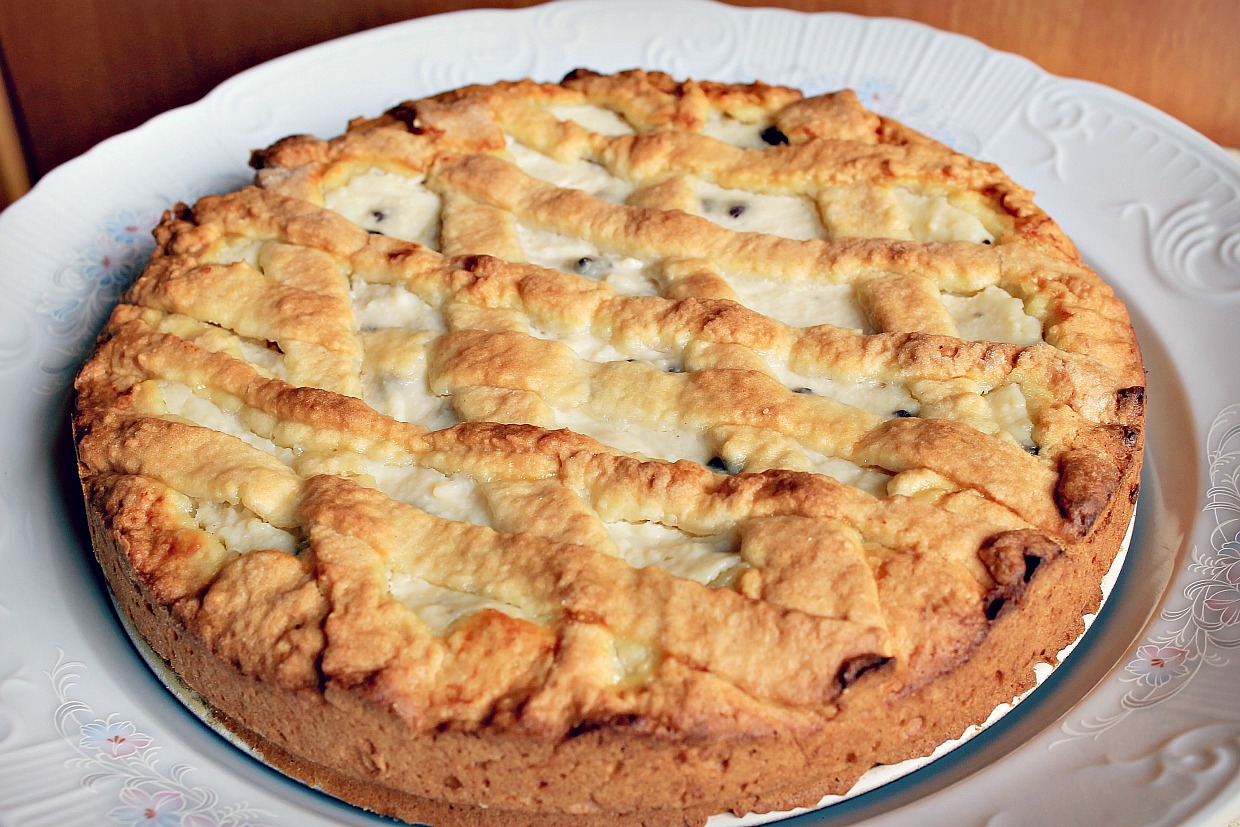
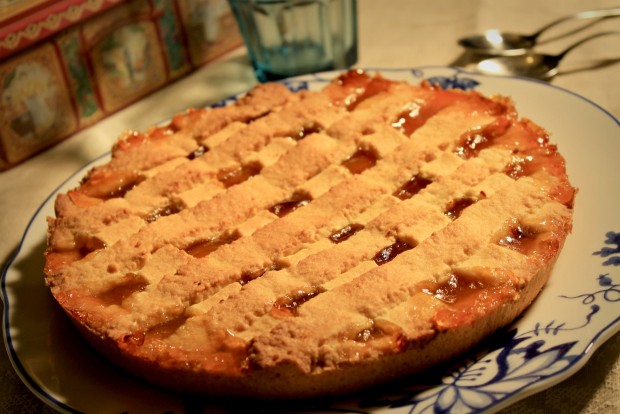
I don’t think you would ever guess which sweet comes to mind when I think of Italy. It’s not the world-famous gelato, nor tiramisu, nor even panna cotta, but the apricot crostata that I used to eat on Saturday afternoons at the bar near our house when we lived in Bracciano. They didn’t have anything else at snack time, since it was a place mainly frequented in the morning and from Monday to Friday. Those crostatine weren’t bad, but not enough to distract me from the fact that it was another Saturday afternoon, of another weekend away from my family, where the most exciting activity I would enjoy would be precisely eating a crostatina, leaning on the counter of a very old-fashioned roadside bar, next to the hospital in the second most boring town in all of Italy, even if the even more popular Tom Cruise and Saint Katie had gotten married in its famous castle. Moments when my mental moderator would get bored until it fell asleep, and the most viscerally human thoughts and feelings would take over to, in short, ask me what the hell I was doing in Italy. I suppose the crostata-longing association from my first months away from home is what made me loathe crostate and Italy for a good while.
The star of this post, more than a dessert, would fall into the category of pasta, because in its simplest version, the apricot or peach one and the blueberry one, it is usually eaten for breakfast, as a snack, or to accompany a coffee, and very rarely as the final apotheosis of a meal. To find a piece of crostata or a crostatina, the individual version of the crostata, you don’t need to go to a bakery. They have them in bars, bakeries, and supermarkets. The Italian crostata is so old that its exact origins are unknown. There are several stories and even a very curious legend circulating, with Naples as the only setting or common point.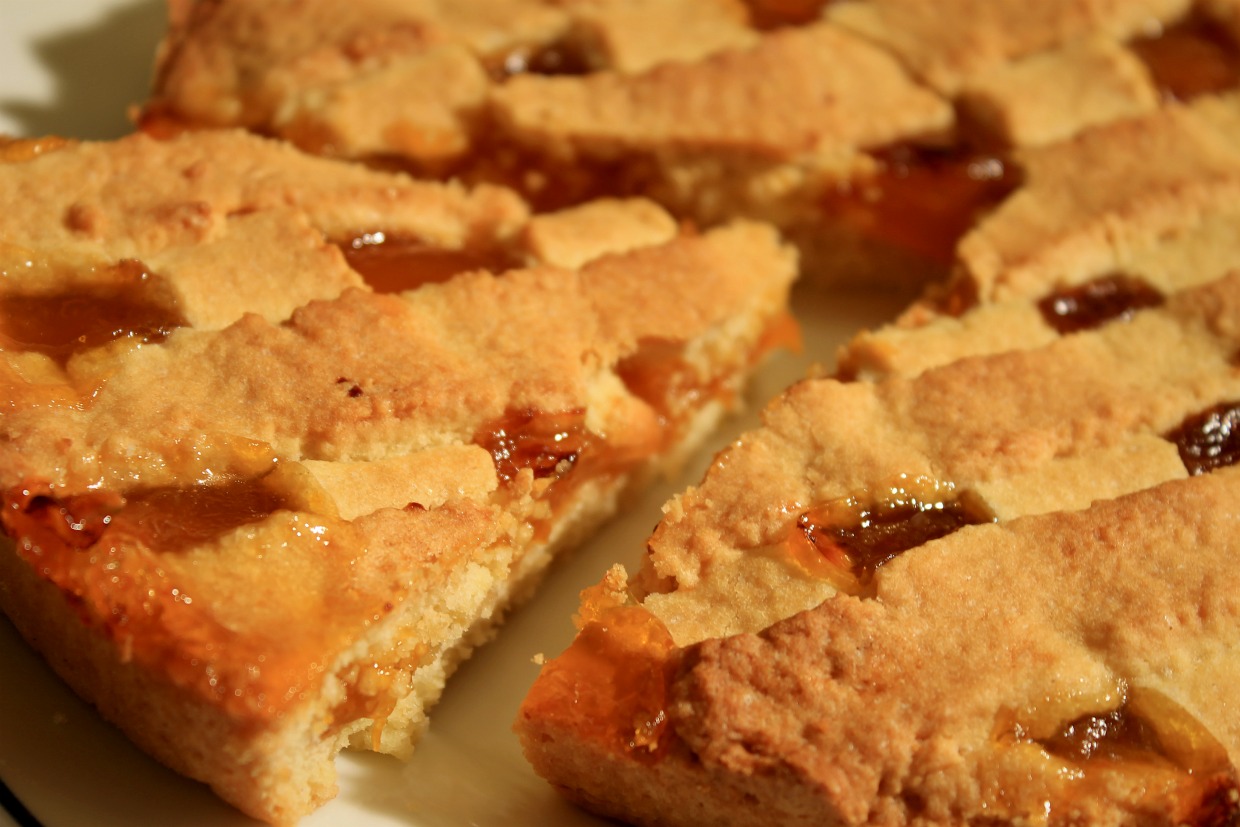 The legend speaks of the spring offerings that the people brought to the Gulf of Naples for the Siren Parthenope. They gave her the most precious things they possessed, which were nothing more than the ingredients of the ricotta crostata separately. One day Parthenope, in turn, offered these foods to the Gods; they turned them into the famous sweet, and the siren gifted it to the people as a thank you for the initial offering.
For some time now, I have reconciled with the crostata. I don’t know if it’s because the one I make myself at home has made me rediscover it, or perhaps because, in general, since we are talking about little mermaids, I have stopped suffering from the complex that tormented me while I was eating it. It is hard to leave everything from one day to the next for love; to sacrifice your own voice, which is nothing more than the possibility of expressing yourself in your own language, which at the same time means not only a way of speaking, but of living, the symbol of a land, of a way of understanding the world and, above all, not having your family nearby. Complaining, however, turns out to be endearingly ridiculous when it turns out that the only volunteer for your exile has been yourself. Besides, it is time wasted that you could invest in adapting, seeing the advantages that a new place offers you, learning from the customs of others. I think that, as of today, I am fully integrated, but if for some reason I had to return with my tail between my legs, at least I could say that I have learned to make a more than acceptable crostata.
Contents
Visit my YouTube channel
If you haven't already, I invite you to subscribe to my YouTube channel so you don't miss any new recipes.Don't forget to follow me on Instagram! There I share more recipes, tips, and special content for Italian food lovers.
The latest video recipes from my channel!

The card
- 300 g of wheat flour
- 100 g of sugar
- 100 g of butter
- 1 teaspoon of baking powder (the classic Royal)
- 1 lemon
- 2 eggs
- A pinch of salt
- 1 jar of apricot jam (or whichever you like best)
- Place the flour on the marble or any flat (and clean) surface on which you can comfortably knead the pasta frolla.
- Make a hole in the middle of the mountain of flour and add the sugar, the eggs, the baking powder, the butter cut into small pieces, the grated zest of a lemon, a pinch of salt, and knead everything until the dough is compact. If you have a food processor, put the ingredients inside the bowl and let it do the work for you.
- Make a ball with the dough, wrap it in plastic wrap, and leave it in the fridge for at least half an hour.
- Take the dough out of the fridge and roll it out with a rolling pin. If you don't want to dirty the rolling pin and want to prevent it from sticking to the dough, place a sheet of paper over the dough and roll the rolling pin over it. The thickness of the dough should be about 4 mm.
- Preheat the oven to 180 degrees.
- Grease the mold with butter and place the dough inside, cutting off the excess that hangs over the edge of the mold.
- Spread a layer of jam over the base of the crostata.
- With the leftover dough, make a ball, roll it out with the rolling pin, and cut it into strips for decorating the crostata.
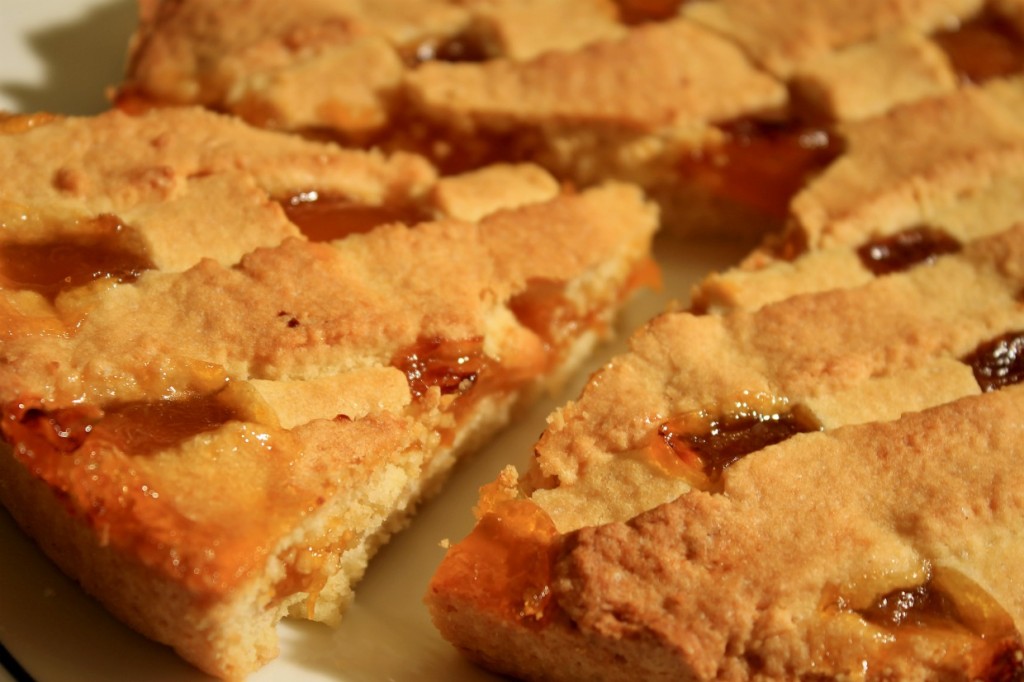
- Cross the strips of dough over the jam to form a lattice like the one in the photograph.
- Join the ends of the strips with the edges of the crostata dough using a fork. (I did it with my fingers, because sometimes I'm a bit messy)
- Bake the crostata for 40 minutes. If the oven is convection, half an hour will be enough.