


In the heart of the Salento, among centuries-old olive groves and the intense perfume of wild arugula, one of the most authentic jewels of Apulian gastronomy is kept: the Apulian frise (friselle). With origins so ancient that some historians link them to the diets of medieval travelers, this twice-baked bread transformed into a humble and resilient food, ideal for difficult times. Its hard texture, comparable to a cracker, made it the perfect sustenance for peasant families in winter, evolving over time into a symbol of Mediterranean flavor full of history.
Índice
In this recipe, I share how to prepare them just as they do in the province of Lecce, with fresh tomatoes, capers, arugula, and pickled eggplants, and how you can find them ready to use today: many gourmet supermarkets and even some Italian shops in Spain already offer authentic imported frise, if you cannot get them directly from Salento.
And, as tradition dictates, the perfect accompaniment for this delicacy is a good Negroamaro red wine, dry but with soft notes, unique to these Apulian lands, which enhances every bite.
Watch the video with all the steps
Below you can watch the video with all the recipe steps to prepare Apulian frise (friselle) in the easiest way. And if you haven’t already, I invite you to subscribe to my YouTube channel so you don’t miss any new recipes. Don’t forget to follow me on Instagram! There I share more recipes, tips, and special content for lovers of Italian cuisine.
Main ingredients
For 2 people
⏱ Preparation time: 10 min
⏱ Cooking time: 0 min (bread already baked)
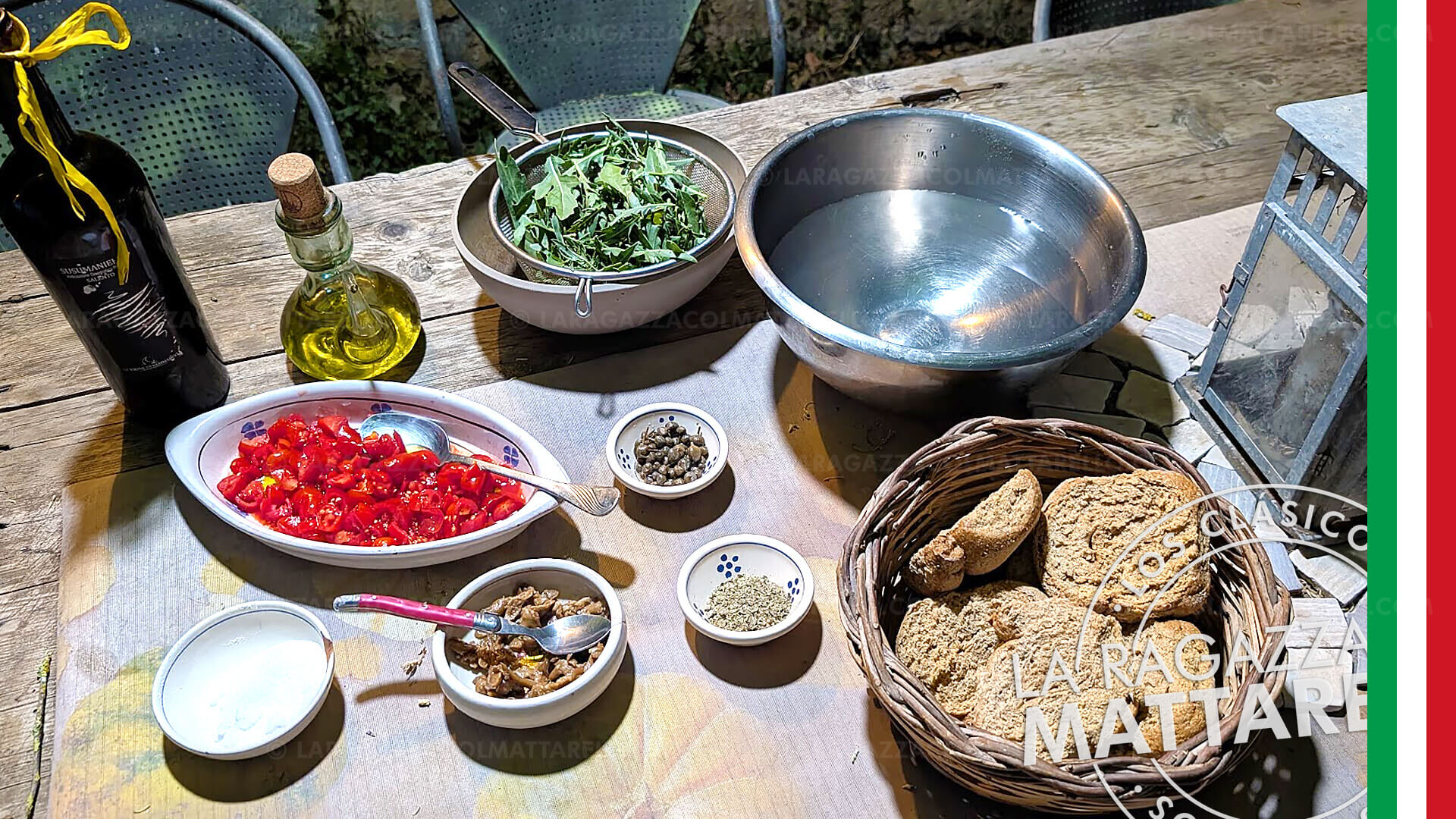
- 2 wheat or barley frise (friselle)
- 3 ripe tomatoes
- 1 handful of fresh arugula
- 2 tablespoons of pickled eggplants
- 1 teaspoon of capers
- Dried oregano
- Extra virgin olive oil
- Salt
Remember: At the end of the article, you will find the complete recipe card with detailed preparation times.
How to prepare Apulian frise (friselle)
The sponzatura
Frise are twice-baked bread. They are as hard as a cracker, and to eat them, you have to soak them in water for a few seconds. If they are wheat, 5 seconds is enough. If they are barley, they need a few more seconds. The trick is not to overdo it: they must remain tender, but not mushy.
The tomato is crushed
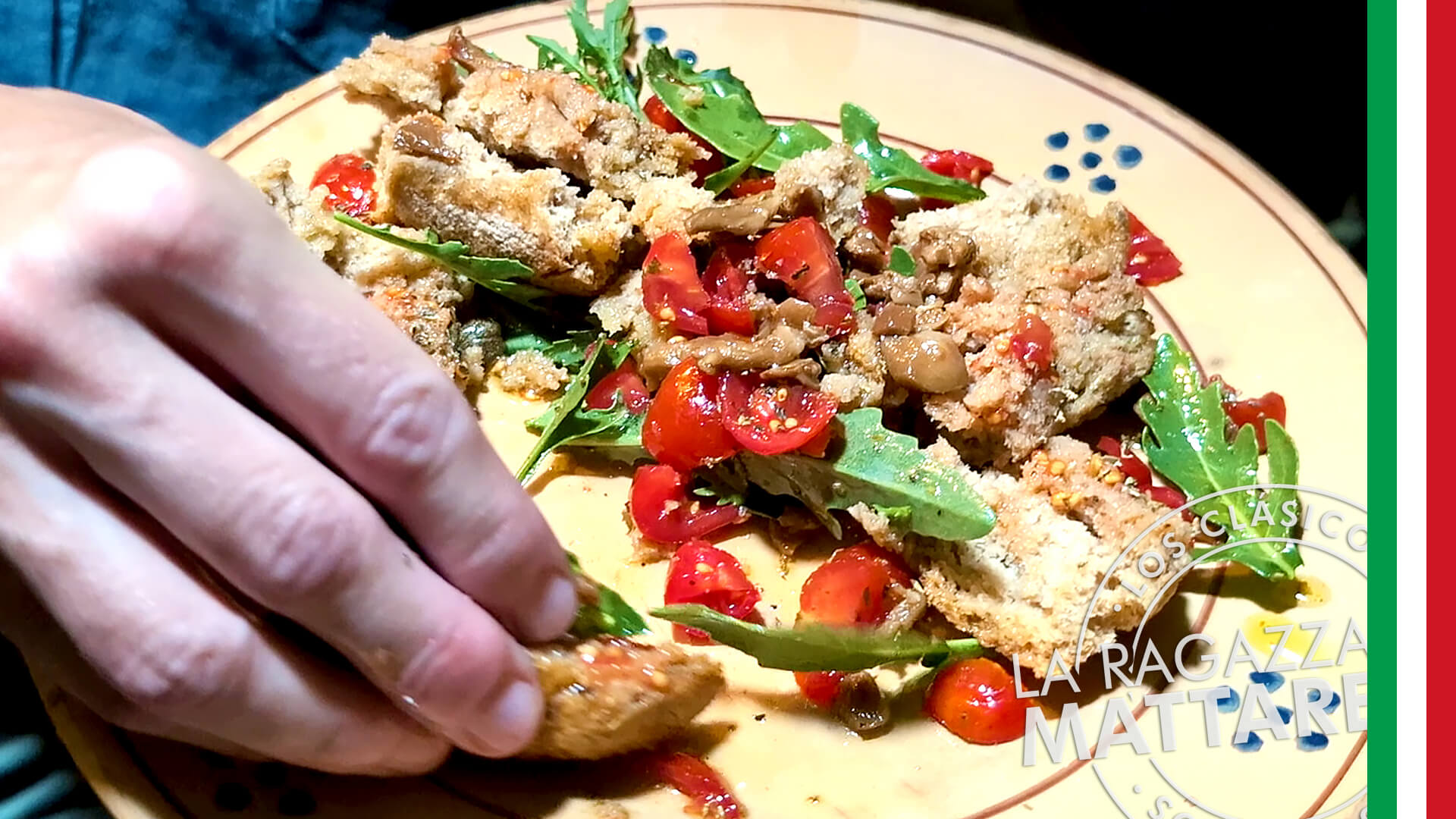
Once ready, they are placed on a plate and covered with tomato. The tomato must be crushed well with your hands so that it releases all the juice and it penetrates the frisa.
Fresh ingredients
Add capers, a little salt, oregano, pickled eggplants, and freshly picked arugula. The flavor of wild arugula is very intense and is the key to this dish.
Abundant oil
Extra virgin olive oil is what brings it all together. Don’t be afraid, a good generous drizzle over the frisa.
Eat with your hands
Frise are not cut with a knife or eaten with cutlery. They are eaten with your hands, as peasant tradition dictates.
Serve and enjoy
Frise are enjoyed cold, in summer, accompanied by a good glass of red wine. The perfect combination is with a Negroamaro, an indigenous red wine from Salento. The contrast between the freshness of the tomato, the intensity of the arugula, and the character of the wine is unmatched. That’s what the real Salento tastes like!
Tips and tricks for a perfect result
Do not overdo it with the water
Soaking the frise too much leaves them mushy. A few seconds are enough, depending on the type of flour.
Use very ripe tomato
The flavor of the tomato is fundamental. The juicier and riper, the better result you will have.
Wild arugula if possible
The strong and bitter flavor of field arugula is what distinguishes this recipe. If you don’t have any, use the freshest you can find.
The wine matters
The ideal accompaniment is with red wine, especially Negroamaro.
Frequently Asked Questions
How long should I soak the frise?
If they are wheat, about 5 seconds. If they are barley, they need a little more. They should not become mushy.
Can I prepare the frise in advance?
It is best to hydrate and season them at the moment. If done beforehand, the bread can become too soft.
Which wine goes best with frise?
Negroamaro from Salento is the perfect pairing. It is a delicate red wine that enhances the flavors.
Can the toppings be varied?
Yes, in addition to tomato and arugula, you can add capers, pickled eggplants, olives, or whatever you have on hand.
Are frise eaten with cutlery?
No, the tradition is clear: they are eaten with your hands.
Related recipes you will love
If you enjoy traditional Southern Italian cuisine, here are other ideas:
- Pasta al pomodoro: simplicity and freshness in every dish.
- Multicolor Caprese salad: colorful tomatoes and very fresh buffalo mozzarella.
- Pasta alla Norma: The exquisite Sicilian classic full of character.
Enjoy your Apulian frise (friselle)!
With few ingredients and a few seconds of water, this hard bread transforms into a dish full of flavor. Give it a try at home and tell me in the comments which version you prefer.
If you liked this recipe, subscribe to my YouTube channel and follow me on Instagram to discover more authentic Italian dishes. I would love to see your photos and comments!
Bon appétit!
The latest video recipes from my channel!
The card
Apulian Frise (friselle)
Ingredients
- 2 wheat or barley frise
- 3 ripe tomatoes
- 1 handful fresh arugula
- 2 tablespoons pickled eggplant
- 1 teaspoon capers
- dried oregano
- extra virgin olive oil
- salt
Instructions
- Soak the frise for a few seconds in water (5 seconds if they are wheat, a little longer if they are barley).
- Place on a plate.
- Crush the tomatoes with your hands and add them on top.
- Add capers, pickled eggplant, fresh arugula, and oregano.
- Season with salt and plenty of olive oil.
- Serve immediately.
Notes
Never soak the frise too much so they don’t get soggy.
nAlways pair with red wine, ideally Negroamaro from Salento.
Video
