


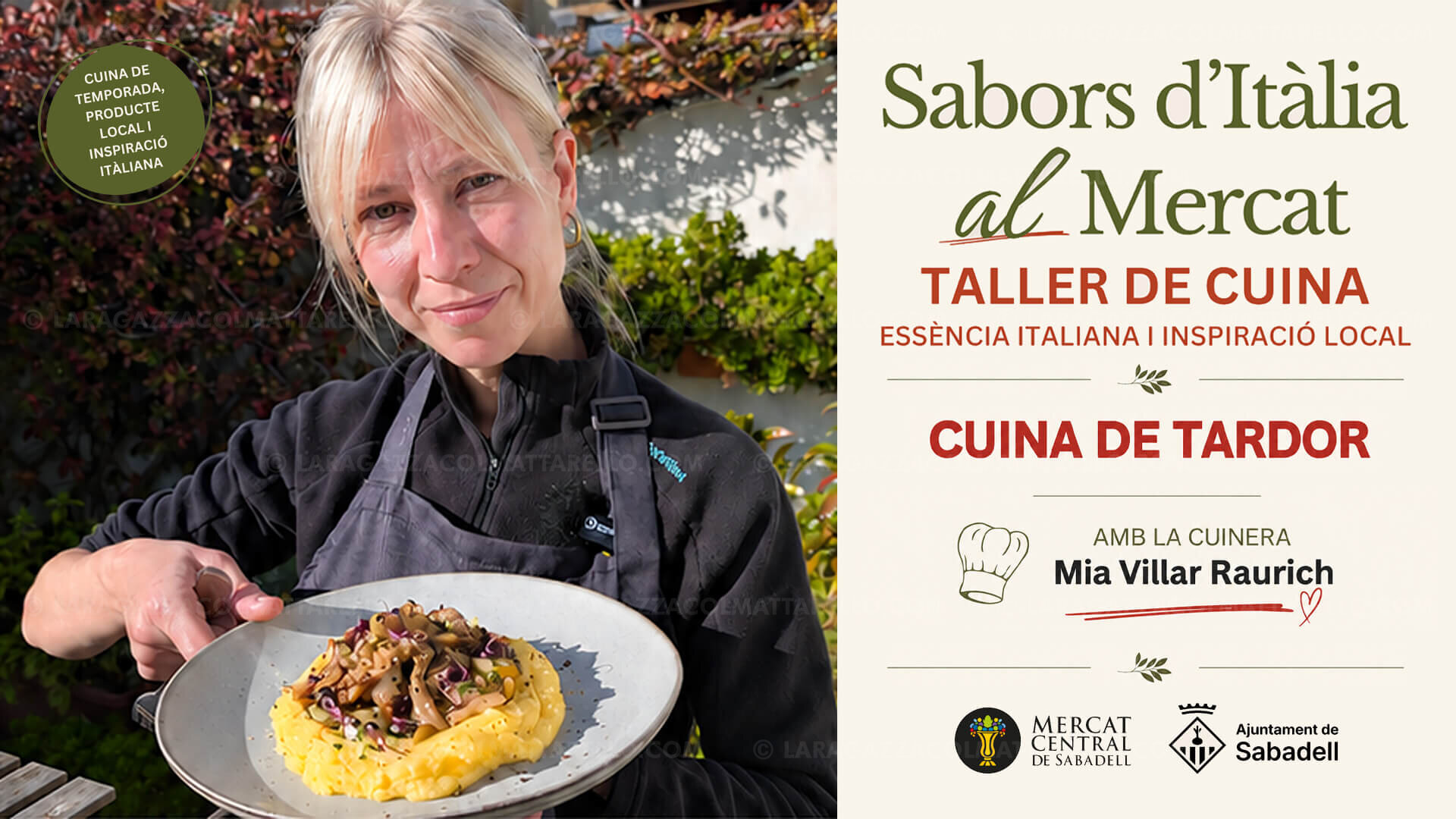
What is the difference between a “butifarra de pagès” and a “butifarra del perol”? As soon as we put them in the pan, you will see it right away. And when we stop by the fishmonger, remember to ask them to save the monkfish bone: we will use it to make the broth for the second dish of this Italian cooking workshop at the Mercat Central de Sabadell.
Índice
We will start with a creamy polenta with mushrooms, sherry-glazed grapes, and two Catalan sausages. The “pagès” one browns and stays in little pieces. The “perol” one melts into the sauce and, when that sauce mixes with the polenta, you can start getting your spoon ready.
Afterward, we will prepare some linguine with monkfish and fennel ragù. I like to finish this dish with a bit of mandarin peel grated directly over the hot pasta. The citrus aroma rises immediately and, with the little fennel fronds, it already smells like a party. I save one last touch for the moment of plating: a pinch of licorice.
Both recipes are for two people. Below each one, you have its video and, at the end, I explain how to prepare the monkfish broth at home.
The November Italian cooking workshop
Sabors d’Itàlia al Mercat · Autumn cooking workshop with Mia Villar Raurich
📅 Saturday, November 28, 2026, from 11 a.m. to 1 p.m.
📍 Mercat Central de Sabadell
Thanks to the Mercat Central de Sabadell and the Sabadell City Council for opening the market doors to us once again to cook together.
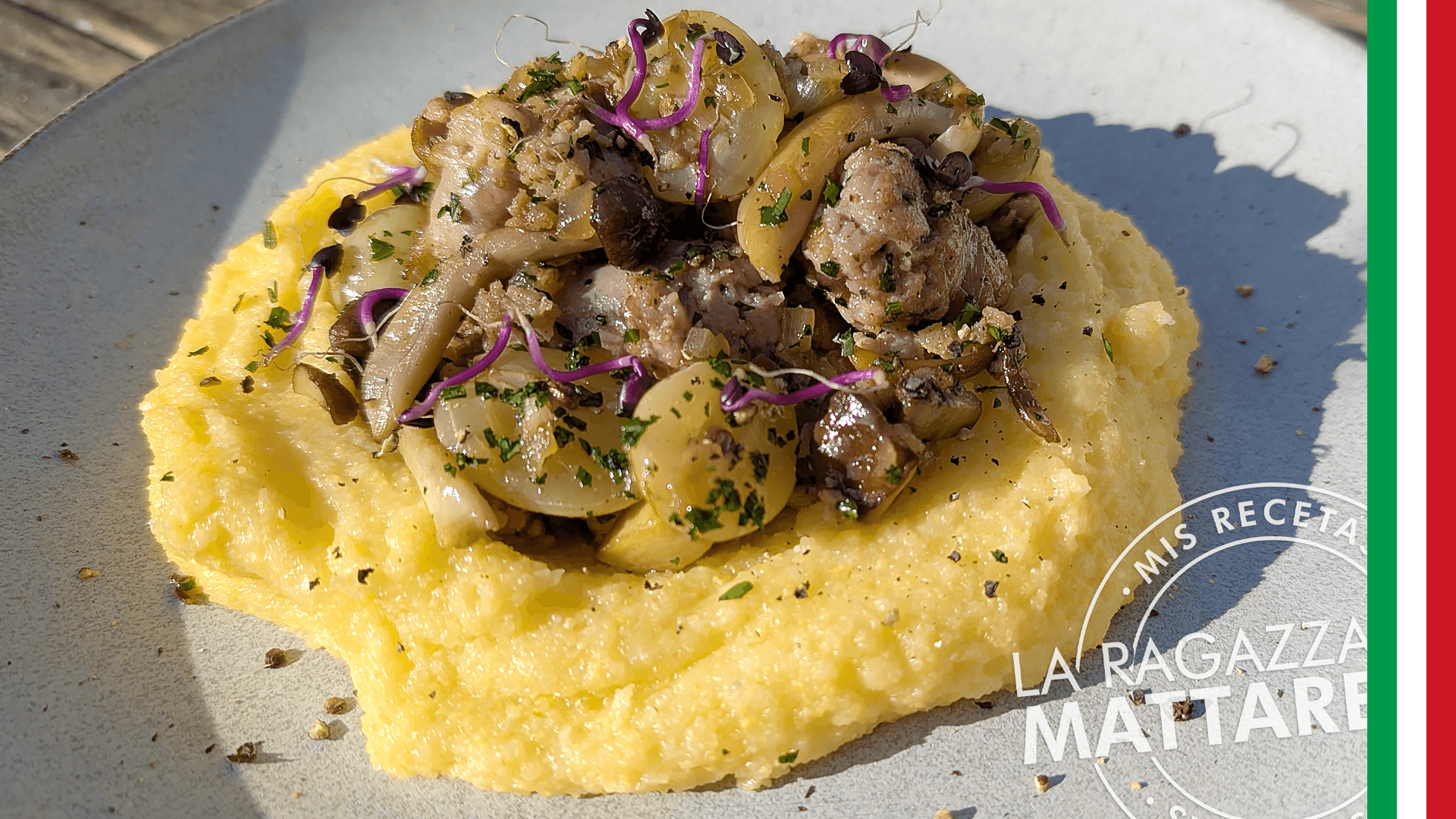
Creamy polenta with a duo of sausages, mushrooms, and sherry-glazed grapes
In Italy, one does not live on risotto, pasta, and pizza alone. I especially like polenta when there are juices to soak up. That is why I prepare the sausages with the mushrooms and grapes first, and leave the polenta for the end. This way, it arrives at the table freshly made and still creamy.
For 2 people
⏱ Preparation time: 15 min
⏱ Cooking time: 25 to 30 min
Necessary utensils
Large frying pan · saucepan · whisk · wooden spoon · knife · cutting board · grater
Ingredients for the sausages and sherry-glazed grapes
- 120 g butifarra de pagès
- 80 g butifarra del perol
- 100 g grapes
- 50 g onion
- 50 ml dry sherry
- 10 g extra virgin olive oil
- Salt and black pepper
For the mushrooms and the finish
- 160 g assorted fresh mushrooms
- 1 clove of garlic
- 6 g extra virgin olive oil
- 5 g fresh parsley
- Radish sprouts to taste
For the polenta
- 180 g Valsugana instant polenta
- 720 ml water
- 4 g salt
- 15 g butter
- 20 g grated Parmigiano Reggiano
Preparation
1. Prepare the ingredients. Clean the mushrooms and cut the larger ones. Chop the onion, wash the grapes, and cut them in half. Cut the butifarra de pagès into bite-sized pieces and the butifarra del perol into slices or chunks.
2. Sauté the mushrooms. Heat the 6 g of oil in a large frying pan with the slightly crushed garlic. Add the mushrooms and sauté over high heat until they lose their water and turn golden. Remove the garlic and set the mushrooms aside. Continue working in that same pan.
3. Brown the sausages separately. Start with the “pagès” one. Add a little of the 10 g of oil if necessary, brown the pieces on all sides, and let them cook through. Remove them. Briefly sear the “perol” one and set it aside as well.
4. Poach the onion. Add the remaining oil as needed by the pan and cook the onion over medium-low heat for 6 to 8 minutes. While stirring, collect the juices left behind by the sausages.
5. Add the grapes and sherry. Sauté the grapes for 2 to 3 minutes, trying to keep them whole. Pour in the dry sherry and let it reduce until you have a short, shiny sauce.
6. Bring the stew together. Return both sausages to the pan. Stir gently so the “perol” sausage binds the sauce. Adjust salt and pepper. Incorporate the mushrooms just long enough to heat them through and, off the heat, add the chopped parsley.
7. Cook the polenta. Bring the 720 ml of water with the 4 g of salt to a boil. Add the polenta little by little, in a steady stream, while whisking. Cook for the time indicated on the package.
8. Finish and serve. Off the heat, incorporate the butter and the grated Parmigiano. If the polenta has thickened too much, add a little hot water and stir. Distribute immediately among the plates. Place the sausages, mushrooms, and grapes with all their sauce on top. Finish with the raw radish sprouts.
The secrets
Let the butifarra del perol melt a little. If a slice breaks while you are stirring, it is on the right track. That part mixes with the onion and sherry and gives body to the sauce. The “pagès” one will give you the golden bite.
Watch the grapes while they sauté. If they are very ripe, they will soften immediately. As soon as they are hot and still whole, add the sherry. It is a pleasure to find half a grape between the sausage and the mushrooms.
Save juice for the polenta. If the sauce becomes dry when reheating the sausages, add a splash of vegetable broth or water. When serving, there must be enough left so that some of that juice falls over the polenta.
Allergen information
Milk (butter and Parmigiano Reggiano) · Sulfites (sherry). Check the composition of the sausages on the label or at the stall and, if you use vegetable broth, check if it contains celery.
Watch the video of the polenta with sausages, mushrooms, and sherry-glazed grapes
Here you can see how each sausage behaves in the pan and the texture with which I serve the polenta.
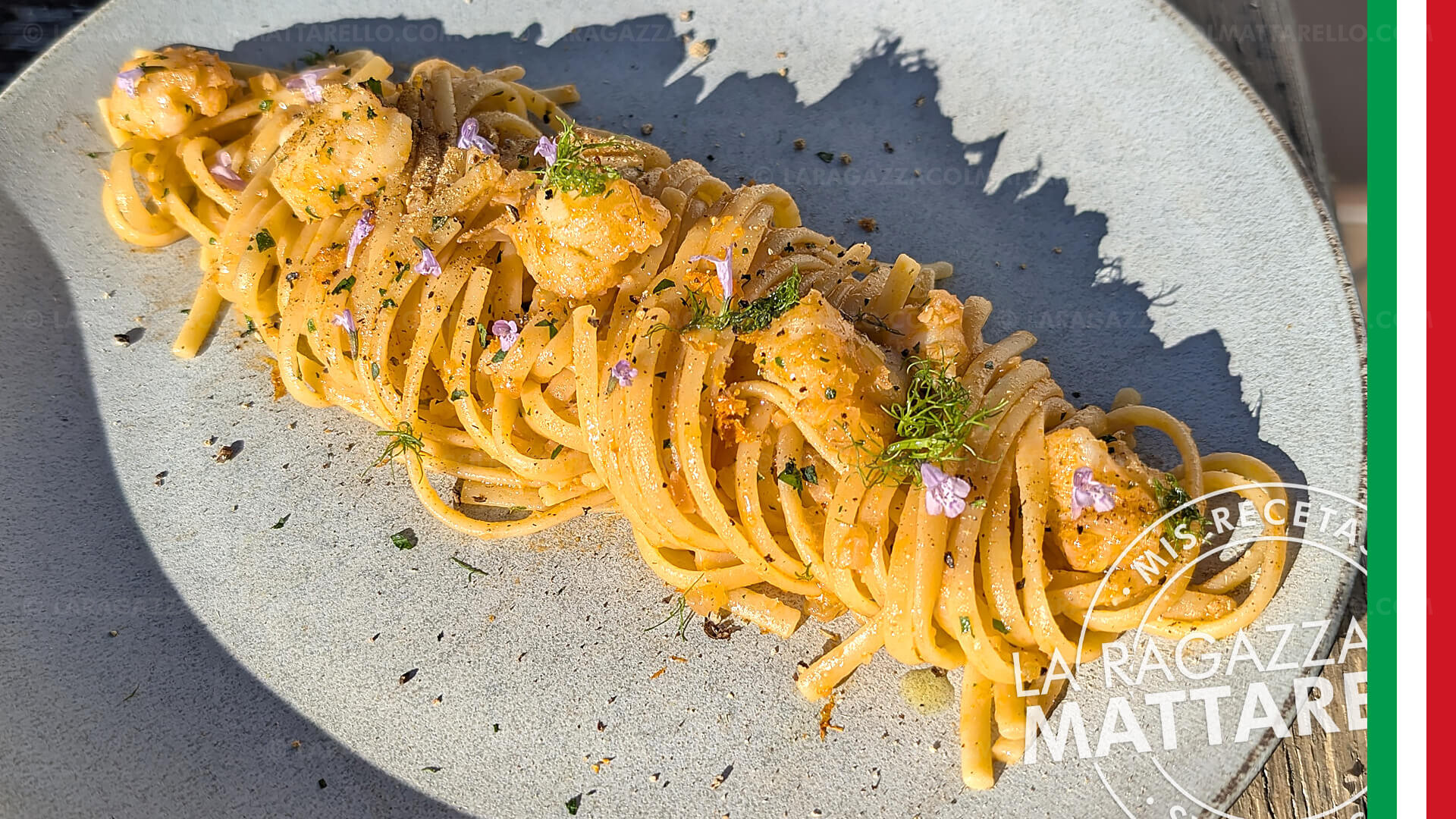
Pasta with monkfish and fennel ragù to dress up the Christmas table
Monkfish loin has firm flesh and lends itself very well to being cut into cubes that are then browned in the pan. While the fennel is poaching with the onion and celery, I set the fish aside with all its juices. I incorporate it when the linguine is almost ready: this way the sauce coats the pasta and you can recognize the pieces of monkfish on the plate.
For 2 people
⏱ Preparation time: 15 min
⏱ Cooking time: 20 to 25 min, not counting the optional broth
Necessary utensils
Pot for the pasta · large frying pan · knife · cutting board · wooden spoon · mortar or bag to crush the almonds · fine grater
Ingredients
- 140 g linguine
- 250 g cleaned monkfish, skin and bone removed
- 50 g onion
- 30 g celery
- 60 g fresh fennel, with some fronds for serving
- 1 whole clove of garlic
- 10 g tomato paste
- 40 ml dry sherry
- 10 g toasted almonds
- 16 g extra virgin olive oil, divided between searing, the base, and the finish
- Monkfish broth or hot water, as needed
- Salt
For the finish
- 5 g fresh parsley
- A little mandarin zest or the fine zest of half an orange, optional
- A very small pinch of pure licorice, grated or powdered
- Black pepper to taste
- Some calamint flowers, optional
Preparation
1. Prepare the monkfish and vegetables. Start heating the pasta water. Remove any remaining skin from the loins and cut the monkfish into 2 cm cubes. Finely chop the onion, celery, and fennel. Reserve some fennel fronds for the end.
2. Flavor the oil and sear the fish. Heat part of the oil with the garlic clove and remove it when golden. Add the monkfish over medium-high heat. Let the cubes brown on one side before turning them. Salt lightly and set them aside on a plate.
3. Recover the pan drippings. With the pan still hot, add two tablespoons of broth or water. Scrape the bottom with the wooden spoon to release what has stuck. Let it reduce a little and pour that juice over the monkfish.
4. Make the base. Add a little more oil to the same pan. Incorporate the onion, celery, and fennel with a pinch of salt. Poach over low heat for 8 to 10 minutes. If it dries out, add a splash of broth or water.
5. Crush the almonds. While the vegetables are poaching, crush the toasted almonds in a mortar. You can also put them in a freezer bag, close it, and give them a few taps. Chop the parsley separately.
6. Finish the ragù base. Incorporate the tomato paste and sauté for a minute. Pour in the dry sherry and let it reduce. Add the crushed almonds and a splash of broth or hot water. Cook for 2 to 3 minutes, until the sauce is juicy and slightly bound.
7. Transfer the linguine to the pan. Cook the pasta in salted water and remove it one minute before the time indicated on the package. Reserve a cup of the cooking water. Mix the linguine with the ragù and a splash of that water until the sauce adheres to the pasta.
8. Reincorporate the monkfish with all its juices. Add it when the pasta is already impregnated with the base. Finish cooking the fish, moving carefully to keep the cubes whole. If necessary, add a little more pasta water. Off the heat, incorporate the parsley and a drizzle of oil.
9. Plate and grate the citrus. Distribute the linguine and collect the pieces of monkfish that usually stay at the bottom of the pan. Add the mandarin or orange zest, pepper, and a tiny pinch of licorice. Finish with the fennel fronds and, if you have them, some calamint flowers.
The secrets
What remains in the pan is also monkfish. When adding the broth after browning the cubes, you will see how it takes on color as soon as you scrape the bottom. Save that juice with the fish to return it to the ragù at the end.
The almond and the pasta water enter at different times. The crushed toasted almond gives body to the base, as in so many Catalan stews. Later, when mixing the linguine in the pan, the starch from the cooking water helps the sauce coat every strand.
Licorice with fish? Yes, but only a pinch. Use pure licorice powder or grate a little just before serving. With a very small amount, the perfume of the fennel is better appreciated and you can still taste the monkfish.
Allergen information
Gluten (wheat pasta) · Fish (monkfish) · Celery · Tree nuts (almond) · Sulfites (sherry). If you change the pasta, check the label to see if it contains egg.
Watch the video of the pasta with monkfish and fennel ragù
In the video, you can see the browning point of the monkfish, how I bind the linguine in the pan, and the small amount of licorice I add when plating.
If you want to start from scratch
What to ask for at the fishmonger
If you buy the whole monkfish, ask them to separate the loins and save the bone and usable trimmings for you. The 250 g in the recipe are of cleaned loin. With the bone, you can prepare the broth while you chop the vegetables. If you start with frozen loins, as I did in the video, you can also use hot water for the base.
Another pasta for the same ragù
Linguine picks up this sauce very well. If you feel like a short pasta, paccheri also turn out great with a fish ragù. They are thicker and usually take a little longer to cook. Check the package time and reserve the last minute for the pan.
The monkfish broth
The bone and trimmings that they saved for you at the fishmonger make a mild broth for the ragù. Use a few tablespoons in the pan and save the rest in portions for another day.
Ingredients
- The monkfish bone and usable trimmings
- 1 carrot
- A little fennel
- A small piece of celery
- A little onion
- A piece of leek
- Extra virgin olive oil
- Cold water to cover
How to prepare it
1. Check the trimmings. Remove any remains of viscera or gills and chop the vegetables.
2. Sear the bone and vegetables. Heat a little oil in a pot. Add the bone, trimmings, and vegetables and let them brown slightly.
3. Cover with cold water. Bring to a gentle boil and cook over low heat for 20 to 25 minutes. Remove the foam that rises to the surface.
4. Strain the broth. Use a few tablespoons to recover the pan drippings and a little more if the base needs it. Cool the remaining broth as soon as possible and freeze it in portions. When finishing the linguine, remember to also save a little of its cooking water: it is what will help you bind the sauce.
Enjoy your meal!